

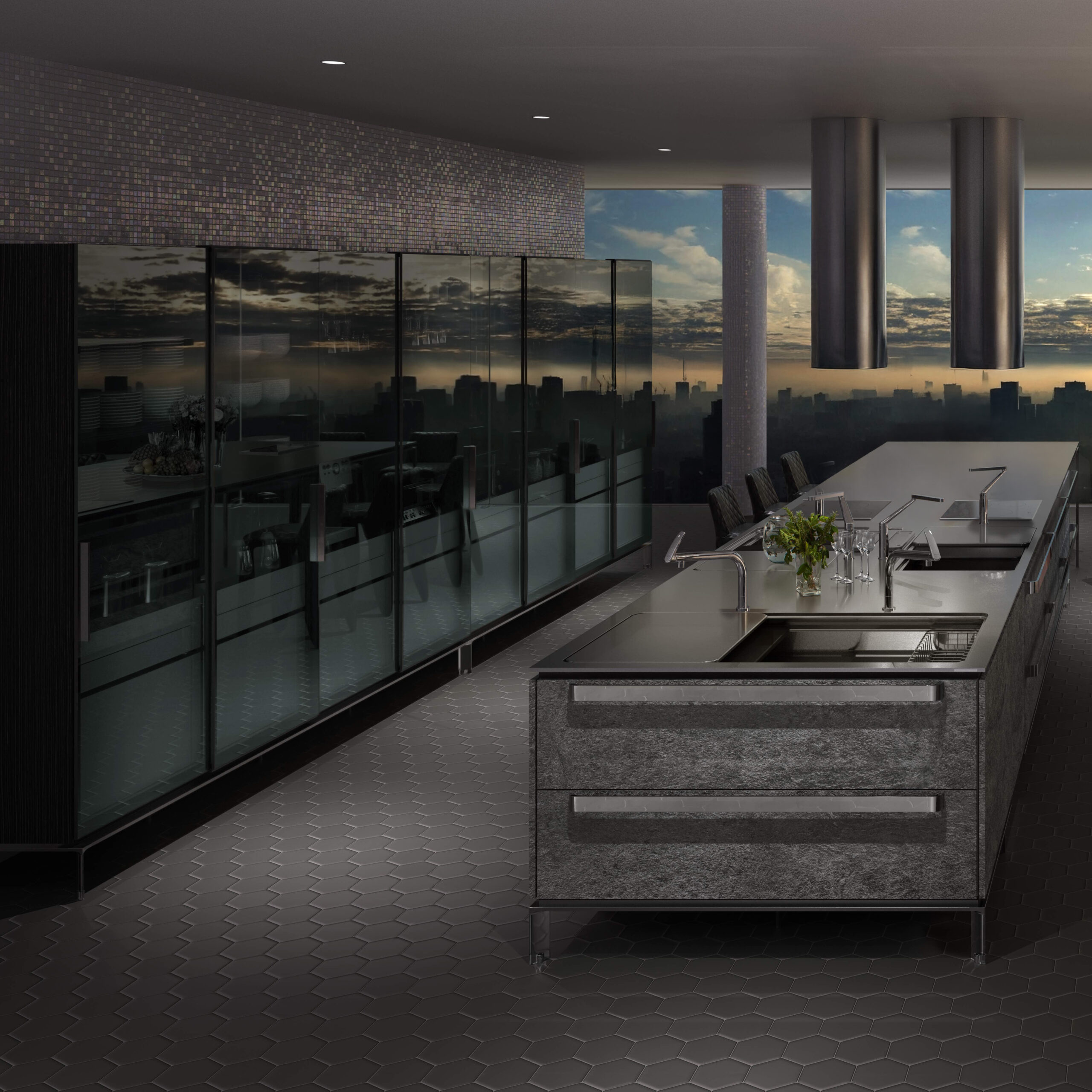
NYC Kitchens Are Becoming Personality-Driven, Not Style-Driven
The most noticeable shift in Japanese kitchen design within New York homes is not aesthetic, it is behavioral. Kitchens are no longer treated as isolated design moments. They are becoming extensions of how people think and move through their day. Some want stillness. Others want subtle tension. Many want both in the same room.
This is where the influence of a Japanese minimalist kitchens shows up, but not in a literal sense. It appears in how space is edited, how sightlines are controlled, and how restraint is used as a design decision rather than a style rule.
In Manhattan, restraint is not about simplicity for the sake of it. It is about clarity in a visually dense environment.
British Craftsmanship as a Form of Architectural Voice
Where Japanese influence removes noise, British kitchen design introduces authorship. Not decoration. Not nostalgia. Authorship.
A bespoke British kitchen brings a sense of structure that feels architectural in nature. Cabinetry is not just storage. It is proportion, rhythm, and weight. These elements create presence without relying on ornament.
In these NYC homes, modern British kitchen design doesn’t feel like traditional replicas. Instead, heritage-inspired designs are transformed and refined into something understated and precise.
The Real Shift: From Minimalism to Edited Expression
The parallels between Japanese kitchen design and British craftsmanship don’t lie in aesthetics, but the editing philosophies they share. In practice, this shows up in very specific ways, allowing kitchens to appear characterful and uncluttered. Every material choice carries intention. Surfaces are reduced, but never flat. Storage is hidden, but never generic.
Japanese kitchen cabinets in these spaces are so much more than interesting design features, they are infrastructure that brings a sense of order. While British detailing on the other hand reveals layers and depth when you interact with it. These considerations are central to projects at Metier Interiors as we carefully consider what stays and what disappears.
Shape, Silence, and Control in NYC Kitchen Design
One of the more overlooked aspects of Japanese kitchen style in New York City is how much it depends on shape rather than decoration. Lines, transitions, and negative space do more work than surface detailing. A shift in depth or alignment can completely change how a kitchen feels.
The equivalent within British cabinetry is precise joinery decisions which make spaces come alive, encouraging fluidity and flow. Both create a sense of controlled thoughtfulness without feeling rigid. Structured, but not static. In Manhattan homes, where every room is often visible from another, this kind of control becomes essential.
Japanese Kitchen Organization as Invisible Design
In many Metier Interiors projects, Japanese kitchen organization is not visible in the final space, but it defines everything underneath it. It is the reason a kitchen feels calm even when it is in use. Not because it is empty, but because everything has been considered in relation to how the space is lived in.
This is particularly important in Manhattan, where kitchens are often active, compact, and constantly in transition between personal and social use. The goal is not perfection. The goal is a system that disappears into experience.
Why This Combination Works in NYC Right Now
New York is not a quiet city. Its interiors rarely should be either. But there is a growing desire for balance. For kitchens that can hold activity without reflecting chaos back at the user.
This is why Japanese kitchen design paired with British craftsmanship feels so aligned with this moment. One brings reduction. The other brings structure. Together, they both create space for personality without excess.
Metier Interiors often sees this in clients who are deeply creative. They do not want trend-driven kitchens. They want environments that support thinking, hosting, creating, and living without interruption.
Frequently Asked Questions
Kitchens as Edited Expressions of Life
The convergence of Japanese kitchen design and British craftsmanship is not creating a new style category in NYC. It is creating a new way of thinking about kitchens altogether. Less about display. More about editing. Less about replication. More about authorship.
In this context, kitchens become deeply personal without needing to be over the top. Instead they hold identity through restraint, proportion, and material intelligence.
Metier Interiors continues to explore this balance in New York homes where design is not about trend adoption, but about creating spaces that feel lived in, considered, and quietly expressive over time. If you’re starting to think about your own kitchen differently, exploring what this kind of approach could look like in your home is a natural next step.


