

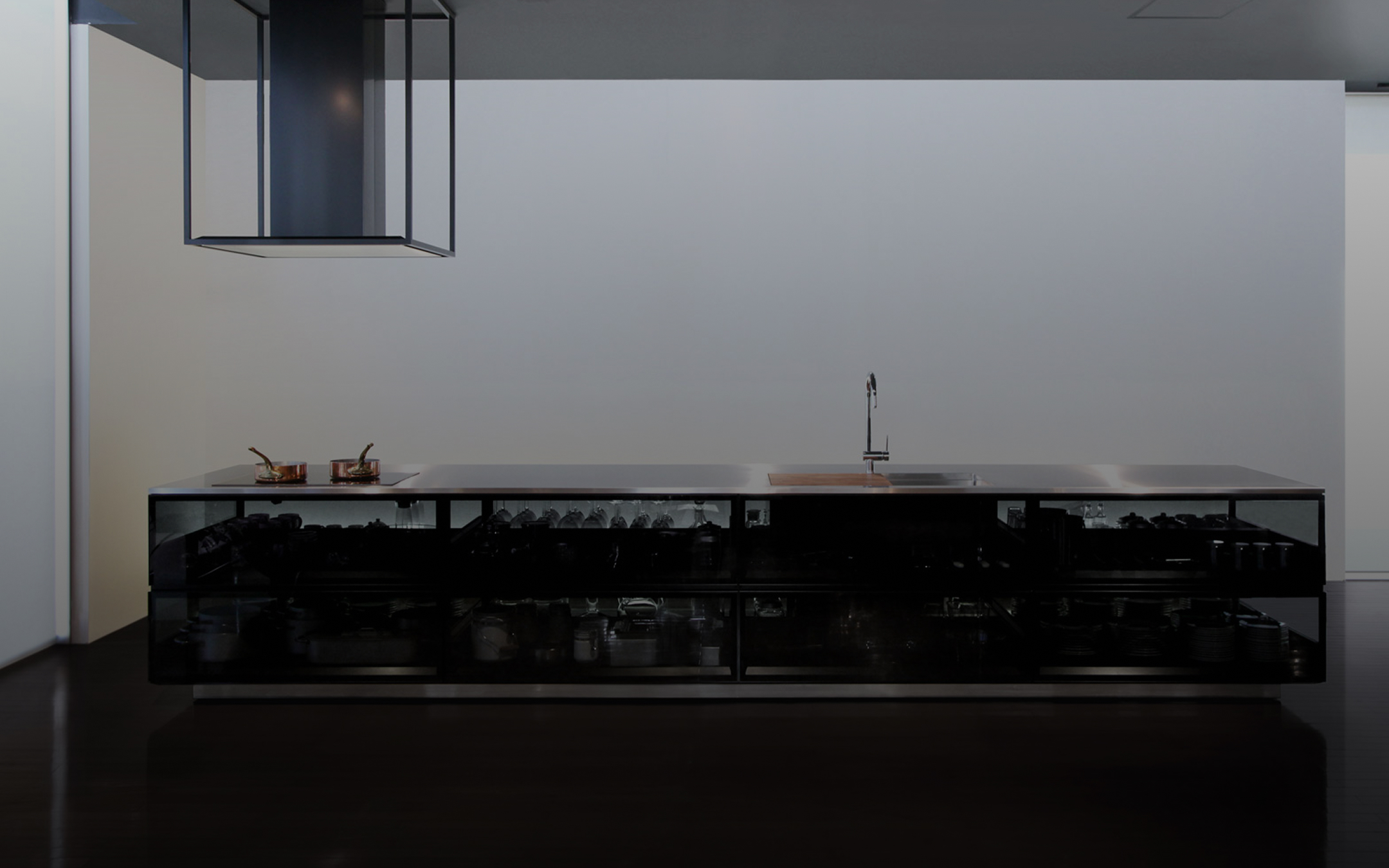
Harmony in a Bustling City
Manhattan moves fast. Every square foot is planned, every moment charged. So, in that rhythm, there’s a quiet longing for balance, for something intentional and grounding. This design aesthetic answers those needs through clarity and restraint.
Japanese kitchen design values simplicity not as emptiness, but as space for clarity. Clean lines and uncluttered forms give room for movement. Storage disappears into thoughtful millwork and natural light finds its way across matte stainless-steel. In a place where space is always at a premium, every decision becomes an intentional choice.
To honor Toyo Kitchen Style, a hallmark of craftsmanship and innovation, Metier Interiors celebrates its legacy of precision and artistry by bringing it to New York kitchens. The philosophy behind Toyo’s approach, that beauty lives in utility, aligns deeply with our belief that kitchens should move you, inspire you, and quietly elevate daily life.
The Japanese word ‘ma’ refers to the space between, the interval that gives meaning to what surrounds it. In Manhattan kitchens, that sense of pause can transform the way people experience their home.
More Than Minimalism
Minimalism is often misunderstood as cold or stark. But in spaces informed by Eastern aesthetics, NYC homeowners embrace it as something richer. It’s a curation, a focus on what matters most and allowing it to shine.
Surfaces are serene, but never lifeless. Patterned stainless-steel surfaces bring texture and depth while airflow platform designs make cabinetry appear like floating furniture above warm wooden floors.
In the heart of the city, these kitchens create a living calm. They encourage slower mornings, unrushed dinners, a space for quiet, reflective thoughts.
The Beauty of Function
Form follows function, but in Japan, function itself becomes beautiful. Every drawer opens with purpose. Handmade sinks are multi-functional. Every choice respects both the hand and the eye.
In a city apartment, where kitchens often serve multiple roles – workspace, dining area, and family hub – that mindset is transformative. A kitchen renovation designed with this philosophy doesn’t just add storage or new finishes; it reshapes how a space is used and how it’s inhabitants feel.
Cabinetry hides appliances when not in use to preserve calm and kitchen islands can double as a communal dining table, creating intimacy without clutter. Sliding panels, recessed lighting, and bespoke joinery create a seamless flow. Everything has a place, and everything belongs.
This isn’t just efficiency. It’s poetry in motion, quiet design facilitating busy lives.
The Role of Nature in The Urban Home
Even in the most vertical of cities, Japanese design finds ways to connect you to nature. It might be through warm wood grain, linen textures, or a carefully framed view from a window.
Materials are chosen for how they age, how they reflect light, and how they feel in the hand. They carry the spirit of craftsmanship, a respect for process and what’s come before. In doing so, they soften the edges of big city living.
Matte stainless-steel, natural stone veneer, or warm piano lacquered wood bring balance to the cool concrete and glass of the city outside. The result is an environment that doesn’t just look organic, it feels alive.
Light, Space, and Flow
One of the most overlooked qualities in design is rhythm, the way a space appears to move around you. Japanese kitchen design masters this effortlessly. Light, layout, and movement flow in harmony, allowing the kitchen to feel open even within tight urban footprints.
It can be as simple as a single source of daylight being amplified by pale finishes or reflection on a stainless-steel surface. Soft, indirect lighting replacing overhead glare or open sightlines connecting cooking spaces with living areas, inviting conversation and calm.
Such a combination of flow and light creates an emotional ease, a sense that the kitchen is guiding you, not the other way around.
Living With Intention
Japanese design is deeply rooted in mindfulness, the idea that how we live each day is shaped by the environment around us. For Metier Interiors, this philosophy lies at the heart of every kitchen we design.
When a space supports your rhythm, when it allows you to move, think, and breathe with ease, it operates as more than a functional box. It becomes personal, it shapes and stays with you.
Calm, considered interiors aren’t simply designed for cooking. They are built for living. For quiet mornings before the city wakes. For shared meals that linger. For stillness, even when the world outside is moving fast.
Crafting Spaces That Affect
At Metier Interiors, we approach each project as a dialogue between client and designer, between material and light, between the present and what’s to come. Japanese kitchen design for modern homes aligns naturally with this approach.
It’s never about replication. It’s about translation. About taking centuries-old design wisdom and shaping it for the way people live now, in Manhattan, in motion, yet also seeking balance.
A kitchen that feels calm at first glance but continues to unfold in meaning each day. That’s the subtle power of Japanese sensibility that’s brought to life by Metier.
A Design Language That Belongs in Manhattan
In a city that thrives on contrast, these kitchen designs bring unity. It’s the art of less, but never empty. The beauty of simplicity, but never sterile. It’s a design language that listens, and that’s why it resonates so deeply here.
If you’re considering a Japanese-style kitchen renovation, Metier Interiors can help you craft a space that does more than just function. We create kitchens that reflect who you are, where you live, and how you want to feel: calm, grounded, and inspired.


