

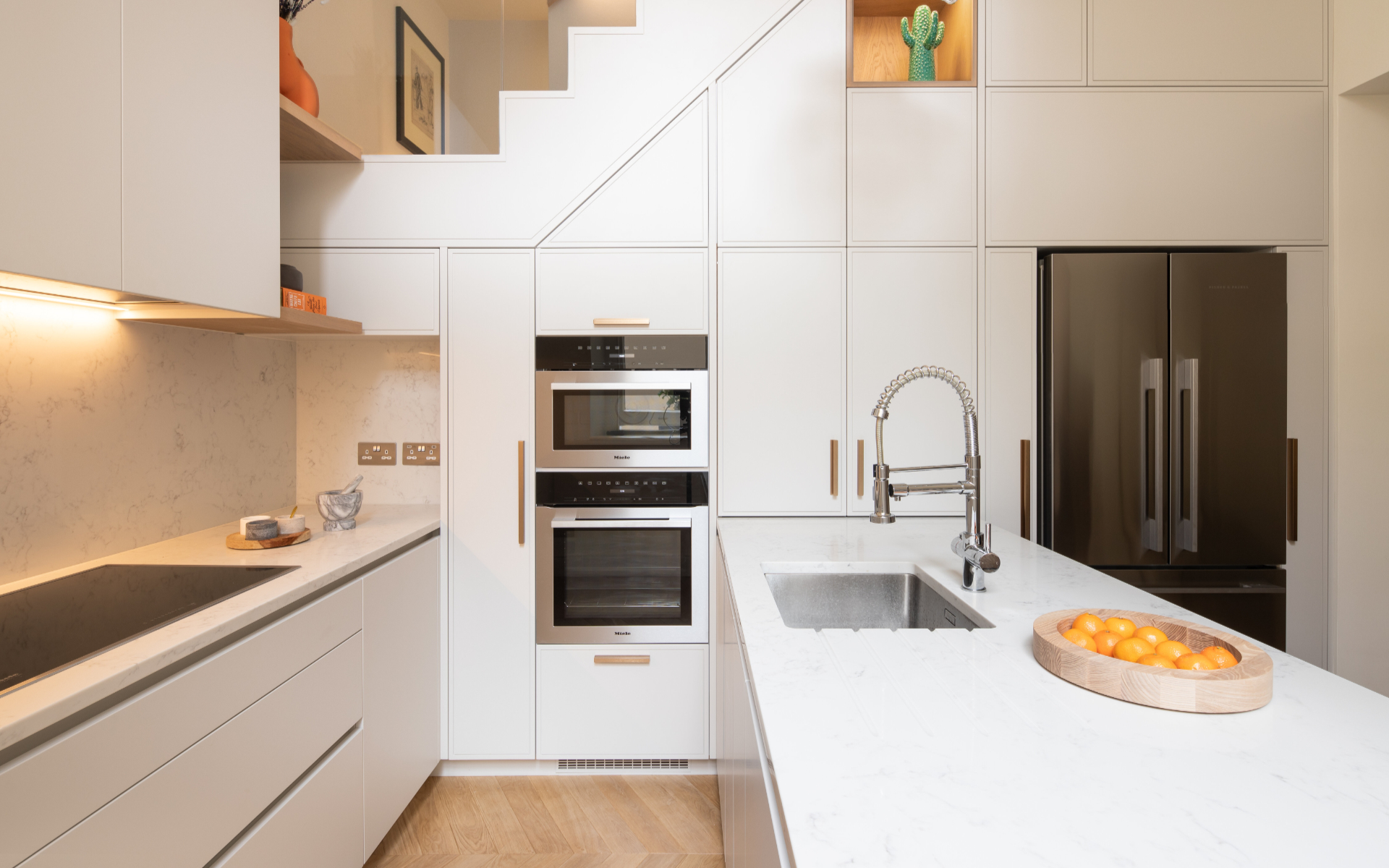
Defining Materials and Finishes in a Kitchen Renovation
The materials and finishes chosen for a kitchen shape how it behaves as much as how it looks. Stone countertops, oak or ash cabinetry, stainless steel accents, and bronze hardware all play a role in that balance between function and feeling.
In real terms, it might mean choosing a limestone surface that softens over time, or an oak cabinet finish that brings warmth into a more structured space. Nothing really exists on its own. One material always affects the next.
In our work, materials are less about decoration and more about experience, vibe, light, texture, and weight within a space. That’s often what separates a kitchen that looks finished from one that feels complete.
How Do We Approach Kitchen Renovations?
A kitchen renovation usually doesn’t unfold in a straight line. It moves between ideas, constraints, and material decisions that gradually shape the direction of the space.
Step 1: Defining the Vision
It starts with how the kitchen actually needs to live. Not just cooking, but how people move through it, gather in it, or pass through it during the day.
Step 2: Material and Finish Selection
This is where things start to take form. Kitchen renovation materials are chosen with durability and feel in mind, but also how they sit next to each other once everything comes together.
Step 3: Integration and Execution
Once decisions are made, the focus shifts to precision. Every surface needs to be realized in accordance with the intention behind it, otherwise even good materials can feel disconnected.
Working with experienced designers helps keep those decisions connected instead of fragmented, especially as details start to multiply.
Why Material Choices Matter More Than You Think
A kitchen renovation has a lasting impact on how a home is experienced. It’s one of the few spaces that’s used constantly, in very different ways, throughout the day.
According to the National Association of Realtors, kitchen improvements remain one of the most consistently valued home upgrades, not just for resale but for day-to-day livability.
But beyond data, what we see in practice is simpler. When materials are chosen without considering how they work together, the space starts to feel slightly off. Not broken, just unresolved. Good material choices and finishes prevent that.
Benefits of Thoughtful Materials
- Long-Term Durability: Well-chosen materials don’t just last longer, they age in a way that still feels intentional.
- Cohesive Design Experience: When materials relate to each other properly, the kitchen feels calm and resolved rather than assembled.
- Improved Functionality: Surfaces like stone, laminate, or stainless steel each behave differently, and when placed well, they make daily use easier without thinking about it.
Kitchen Countertops: The Anchor of the Space
Countertops can set the tone before anything else is even noticed. They carry the most use, but a lot of visual weight. In New York City homes, where proportions can be tight and natural light can be limited, countertop selection can have an outsized impact on how the entire kitchen reads.
We often see a mix of materials used here. Marble or limestone for softness and variation and stainless steel in more functional cooking zones where performance is key.
What matters most is how the surface will live over time. Some materials settle into themselves. Others stay consistent. Neither is right nor wrong, but the choice changes the character of the space.
Flooring That Grounds the Design
Flooring usually does more work than people realize. It affects sound, comfort, and how spaces connect visually. In New York City residences, it also plays a role in softening acoustics and helping open-plan spaces feel less fragmented.
Oak flooring is often used for warmth and continuity. Stone or porcelain tends to feel more grounded and durable, especially in homes with heavier daily traffic. The decision usually comes down to how much contrast or continuity the space needs with the rooms around it.
Premium Finishes That Shape the Details
Finishes are where a kitchen becomes more specific. Brushed metal, bronze hardware, stainless steel accents, and natural wood tones like oak or ash all contribute small but important shifts in tone. Even high-pressure laminate, when used carefully, can create a clean counterpoint to more tactile materials.
What we tend to focus on is restraint. Not every surface needs attention. The strongest kitchens usually know where to hold back.
How to Choose the Best Materials
Choosing materials is rarely about finding the “best” option. It’s more about understanding how things will behave together once the kitchen is lived in. High-use areas naturally call for stronger surfaces like stone or stainless steel. The supporting cabinetry often benefits from warmer materials like oak or ash. And somewhere in between, there’s always a balance to strike between texture, tone, and maintenance.
Working within NYC kitchens often means making those decisions earlier than expected, simply because space and layout leave less room for adjustment later. Working with kitchen renovation designers like Metier Interiors helps keep those decisions connected from the beginning, so the space doesn’t feel like a collection of separate choices.
Frequently Asked Questions
Bringing It All Together
A kitchen renovation is ultimately about how a space holds up to everyday life, not just how it looks when it’s finished.
If you’re considering a kitchen renovation in New York City, exploring the approach at Metier Interiors is a helpful first step. Our work focuses on materials, proportion, and how a kitchen actually feels to live in over time. Learn more about our process and see how those ideas come together in practice.


